
In Defense of a Resistor: Multimeters, People, and an Unchanging Standard
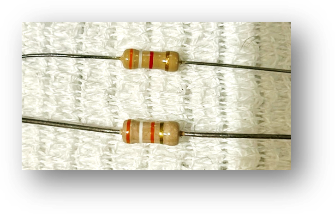
Two general-purpose resistors appeared before me, each bearing the internationally recognized color-code markings. Their neatly spaced bands of color reflected not only the precision of industrial design but also a kind of professional and rational beauty. After confirming their resistance values and power ratings with the store owner, I carried these two tiny components back to the ship.
The chief engineer was delighted. The ship’s equipment finally had a chance to come back to life. His young apprentice was equally excited and immediately took the resistors away to verify their values. A short while later, the apprentice came rushing back. “Something is wrong!” he exclaimed. “This resistor is one thousand ohms lower than the value we need!” The chief engineer picked up the resistor and examined it carefully. He then took a photograph and asked AI: “Please confirm the resistance value of this resistor.” The answer came almost immediately: it was a 3,900-ohm, or 3.9-kilohm, resistor with a tolerance of plus or minus five percent. The chief engineer turned to his apprentice and asked: “Could there be a problem with the multimeter reading? Go and measure it again carefully.” After a while, the apprentice returned with a flushed face and said quietly: “This time, the reading is 3,850 ohms.” Everyone breathed a sigh of relief. The difference between 3,850 ohms and the stated value of 3,900 ohms was only 50 ohms—well within the permitted five-percent tolerance. It was, after all, a perfectly good resistor.
The resistor itself never said a word. In the face of human suspicion, an inaccurate meter reading, and conflicting judgments, it simply remained true to the characteristics assigned to it when it was manufactured. Only after the correct standard of measurement had been restored did everyone finally declare:
“This is a good resistor!”
In life, we often long for a stable and dependable standard. With such a standard, we can plan for the future with confidence and security, moving forward one step at a time. Without it, who would not feel unsettled, anxious, and uncertain? In some ways, we are like that tiny resistor.
God created human beings in His own image, and He looked upon all that He had made and saw that it was very good. Yet when we examine ourselves, we often do not begin by coming before the God who created us. Instead, we measure ourselves through the opinions, expectations, and judgments of the people around us. When others praise us, we feel valuable. When they question us, we begin to doubt ourselves. One failure may make us feel completely worthless, while a single word of criticism can disturb our hearts for a long time.
Sometimes, however, the problem is not with the person being measured but with the “multimeter” being used. The problem is not that God created us poorly, but that we have adopted an unreliable and constantly changing standard.
Human opinions change. Human judgments can be mistaken. Our circumstances are always shifting. Only God’s truth remains unchanged. Our identity and worth are not determined by someone’s temporary opinion, nor by our present successes or failures. They are determined by the God who created us, knows us, and has redeemed us.
May we no longer measure ourselves only through the eyes of others. Instead, may we continually look to God and come before Him in spirit and in truth. Through His Word, may the standard of our lives be properly calibrated once again. May we receive the true standard that comes from God and faithfully preserve the unique beauty and purpose He has given us. Amid the many competing voices around us, may we quietly and faithfully live out the identity and mission He has entrusted to us. May the grace, peace, and strength of our Lord Jesus Christ be with us all. Amen.
為一隻電阻伸冤:萬用表、人與不變的標準
兩隻通用電阻,帶著國際統一的色環標識,出現在我的眼前。那一圈圈彼此相隔的彩色環帶,不僅透露出工業設計的精準,也展現出一種專業而理性的美。向店主確認了它們的阻值與功率規格後,我便帶著這兩個小東西返回船上。
總工程師看見後非常高興——船上的設備終於有機會重新恢復活力了。他的年輕徒弟也十分興奮,立刻拿著電阻去測量確認。沒過多久,小徒弟便急匆匆地跑了回來,大聲說:
「不好了!這個電阻有問題,比我們需要的阻值低了整整一千歐姆!」總工程師拿起電阻,仔細端詳了一番,又拍了一張照片詢問 AI:「請確認這隻電阻的阻值。」AI 回答得很快:這是一隻 3,900 歐姆(也就是 3.9 千歐姆)、誤差為正負 5% 的電阻。總工程師轉過頭來問徒弟:「會不會是萬用表的測量有問題?你再去仔細測一次。」過了一會兒,小徒弟紅著臉跑了回來,小聲說:「這一次測出來是 3,850 歐姆。」大家終於鬆了一口氣。3,850 歐姆與標稱的 3,900 歐姆只相差 50 歐姆,完全在正負 5% 的允許誤差範圍內。原來,它確實是一隻合格的好電阻。
電阻始終沒有說話。面對人的懷疑、儀表的誤讀和不同的判斷,它只是安靜地持守著自己出廠時所被賦予的特性。直到正確的測量標準被重新確認,人們才終於還它一個公道:
「這是一隻好電阻!」
其實,我們也常常盼望生命中有一個穩定而可靠的標準。只有這樣,我們才能帶著信心與安全感計劃未來,一步一步安心前行。否則,面對不斷變化的環境和評價,誰的心裡不會七上八下、惴惴不安呢?從某個角度來看,人也有些像這隻小小的電阻。
上帝按照自己的形象創造了人,也看祂所造的一切都甚好。然而,當我們審視自己的時候,常常不是先來到創造我們的上帝面前,而是先從周圍人的目光、評價和期待中衡量自己。有人稱讚,我們便覺得自己很有價值;有人質疑,我們便開始否定自己;一次失敗,彷彿就證明自己一無是處;一句批評,也可能讓我們的心久久不得平靜。
可是,問題有時並不在被測量的人,而在於人所使用的「萬用表」出了偏差;並不在於上帝創造得不好,而在於我們採用了搖擺不定的標準。
人的眼光會改變,人的判斷可能出錯,環境也會不斷變化;唯有上帝的真理永不改變。真正決定我們身份與價值的,不是別人一時的評語,也不是我們暫時的成敗,而是那位創造我們、認識我們,也救贖我們的上帝。
願我們不再只用別人的眼光衡量自己,而是時常仰望上帝,以心靈和誠實來到祂面前敬拜祂,從祂的話語中重新校準生命的尺度。願我們領受從上帝而來的真正標準,持守祂創造我們時所賜下的獨特與美好;也願我們在眾聲喧嘩之中,仍能安靜地活出祂所賦予我們的身份與使命。願主耶穌基督的恩惠、平安與力量,常與我們眾人同在。阿們!